
Forum-svar oprettet
-
ForfatterIndlæg
-
-
juni 17, 2020 kl. 8:43 pm #65071
Lamberto AzziDeltagerHi David,
I am going to follow the new online course proposed by Giacomo…. have a look here: it includes variable weight training.
I have used the of the double belt and is very comfortable and safe, but the main problem is the current… or you drop your weights to the bottom or you need a boat to pick them up downstream… so here in DK it looks a fine system for wreck fishing but not so much for other techniques that require a silent planing in the last few meters to the bottom.
Have a look here: http://professionalspearos.com/school/

-
oktober 20, 2019 kl. 8:34 am #62683
Lamberto AzziDeltagerHi.
I had a chat with Giacomo De Mola after the Euroafrican and we spoke about variable weight in spearfishing… he came up with some interesting considerations and tips that may be interesting.
I have also spoken with other friends that use VW (not the car…) regularly and i can summarize a few points:
1) there is a trend between the spearos in downplaying the possibility offered by this method, too often connected with deeper dives.
2) why VW? To increase safety and comfort at normal quotas or to reach quotas otherwise unreachable for you? This is the pivoting point and question that everyone has to answer before trying VW
3) pendulum or 2nd belt? I don’t need nor want to fish at depth that I wouldn’t reach in constant weight, so the pendulum is a bit of an excessive solution… I’ll go for 2nd belt (can frenzel… no handsfree required).
4) the acquisition of the correct techniques for a proper compensation of eardrums is given as granted for spearos that want to VW… if in doubt it is better concentrate on the basics before going for VW
The 2nd belt method is easy and intuitive:
– first wear a belt with the minimum weight you’ll need at the quota you want to fish at and right for you wetsuit thickness (trial and error… start with less and add weight step by step)
– second, prepare a belt with just 1-2 kg extra than what you’ll need for the same dive in constant weight … don’t exaggerate because it may be bad for you ears! This belt has a D-ring where you attach your buoy line that, in this case, will be a rope thick enough to be comfortably recovered with gloves (is not an issue of strength but comfort… so 1.5mm dyneema is out of question)
The rest is easy… you dive regularly and compensate regularly… when you reach the gliding quota you simply drop the second belt and carry on with your dive.
Soms guys use a rope 5-7m shorter than the bottom (caduta) while others prefer to reach the bottom and then drop the belt to proceed in agguato or aspetto… you pick. Personally I think that the current conditions may choose for you: if the buoy is firmly anchored to the bottom and you resurface 30-40 meters downstream, you risk not to be able to recover it… also because you’ll float like a cork.
Tomorrow I’ll be in italy and check out about quick lead options for easy setup of the weight… better to ask to the guys who already use it that to go guessing.
On Facebook you can find the page of “Giacomo De Mola athlete” and there he just posted a picture of the dive profiles VW-CW at similar depths (2.5 minutes at -38m for him but it gives the idea of the difference)… I’m on a plane right now so I cannot post the picture so… DIY
Cheers!


-
oktober 1, 2019 kl. 8:27 am #62428
Lamberto AzziDeltagerIn the far 2012 I wrote this guide… and I think it was published on this blog previous version… not sure.
I would like to re-propose it as it may be useful to understand in depth what happens in our body…
I wrote after speaking with an old instructor and ex navy diver.
Attachments:
-
oktober 1, 2019 kl. 8:06 am #62424
Lamberto AzziDeltager@David.
Yes sorry i swap the two in the haste of writing the long text… thanks for spotting it.
The Hypercapniac trigger when the level of PaCO2 is too high, and the Hypoxic trigger when the level of PaO2 is too low because the PaCO2 minimum has not been reached yet at cause of the excessive “blood washing” of hyperventilation. Obviously all syncope are related to lack of oxygen, but for what divers are concerned the difference is in the levels of PaO2 and PaCO2. All syncope are “hypoxic” but for us it is important to know if we have the luxury of an alarm system as the contractions and strong hunger of air or if it just it arrive without warning!
I continue to call the two levels PaO2 and PaCO2 because it identify the “partial pressure” of the gas dissolved in the blood: Henry’s law.
It is important to know that the PaO2 is increased by the depth, so our “gas detection system” will feel an higher amount of O2 when we are in depth as the air in our lungs is compressed: surfacing instead the air in our lungs will expand reducing the O2 concentration and triggering the so called “shallow water syncope”… that is why the hunger for air is less aggressive in deeper dives and ramp up more quickly on the way up.
-
september 30, 2019 kl. 5:31 pm #62413
Lamberto AzziDeltagerBack to safety nerdy stuff…
In Italy there are 300.000 spearos officially registered at the Ministry and I would think at least the same quantity that are “recreational” spearos in summertime that are not registered (those with shorty wetsuit, yellow plastic fins and short airgun with 5-point spear).
Unfortunately there are 10-20 deadly incidents per year, and the 3 main reasons are.
– Hypoxic syncope (most common BO cause)
– Boat collisions
– Entanglements
– Other health problems not related but aggravated by divingIn the last 4-5 years I know of only one guy who got tangled in the line while trying to pull up a big fish: the fish was “doubled” that means shot several times and therefore there where many lines floating around… one line got one turn around his leg and he didn’t managed to untangle in time.
Boat collisions are rare but still happens and few are lethal, especially if one consider the large number of speedboats in some area and the number of spearfishers. A couple of years ago, in Corsica, one Italian spearo on his RIB has hit a guy that was floating on the surface without buoy: he immediately called the Coast Guard and the deceased was recovered. After the authopsy is was clear that the person was not killed by the last impact but was already dead from another boat that hit him a couple of hours before!… so this to give the idea of the danger of diving in some place without a buoy. The topic of effectiveness-ineffectiveness of the buoys and flags need to be discussed on another tread because is quite complex.
Last but also the most common is the Hypoxic syncope:
The therm “black out” is quite vague and includes all 3 kinds of syncope:
– Cold Shock Syncope
– Hypercapniac syncope
– Hypoxic syncopeThe first two are not so common… The CS syncope can happen when the difference between two layers of water is extremely high (20+ degrees) and I’ve never heard of it between spearos, while is very common on Mediterranean beaches when some person that has spent 5 hours being lobstered under the sun at 40 degrees, decide to take a jump in the sea and dive head down… click… you faint.
The Hypercapniac syncope instead happens to those few who still hyperventilate before the dive, thus reducing the partial pressure of CO2 in the blood (PaCO2 level): In this case, you just black out almost without warning, maybe not even contractions of “air hunger” and it is very dangerous because the residual level of oxygen in your blood is already very low. FIRST RULE… NEVER HYPERVENTILATE for spearfishing dives!!!
The third, Hypoxic syncope, is the curse of the spearos, and can be prevented by understanding it and by few rules that one should self-impose. This kind of syncope is triggered when the level of CO2 in the blood is too high, and much before the trigger level is reached your body will start to tell you that air is needed… an urgent and insatiable hunger for air, followed by strong and sometimes painful contractions of the diaphragm. While freedivers, especially in pool exercises, have learned to ignore and control such contractions, a spearo should NEVER ignore them and actually should be on the way back to the surface even before such contractions appear. How long one can ignore the hunger for air before the contractions kick in, is a matter of experience and personal sensibility, but, lacking an experienced and present buddy that can explain it in practice, a good freediving course is highly recommended: that will give you the understanding of the sensation and you will feel much more relaxed and “in control” during the dive, resulting in a much better and safer performance.
Sometimes the syncopate has taken the chance because a large prey… sometimes because he has underestimated the toll of the current and the cold… difficult to say…
What can quickly reduce our bottom time is:
– Digestion… butter, milk, ham, cheese… better to avoid it before the dive and take bread with jam instead, better even is bread and honey. I have got this from Marco Bardi, the captain of the Italian national team since many years, and I must say that it is very true: he told me that killing myself with hard-to-digest food would cut in half my apnea. Funny thing is that he told me that after noting, with a badly concealed smile, that 20 years ago we where of the same size… :-/
– General tiredness… nothing to explain… go to sleep early. To dive right after a night partying with friends and abundant wine can have weird by-effects… and I have videos of massive fuckups to prove it!
– Cold… cold water can be a killer of dive-time. Especially a drastic thermal-cut between water layers while diving, should be taken into consideration.
– Current… if you have to swim against the current while you ventilate, it will take a big toll on your apnea.
– Buoy line drag… it can be very hard with current, especially if you dive in wrecks or reefs where you want to stay on position against the current.
– Training… that is why I always keep the deeper spots for last when I am going in holiday
As I said before, a good freediving course with special attention to spearfishing needs, is a good idea to cut many corners.
Equipment: Yes, equipment is also responsible for the increase of diving accidents in the last years. 30 years ago, before the carbon fins where even invented and the wetsuits where hard as leather, the guys who where going to fish at 20-25 meters where considered demigods. but now even an overweight white-haired boar like me can go down to 20m to check a cave without much preparation… and that because I know that with my carbon fins I can just give a couple of kicks and I’m on the way up… with plastic fins instead is all another game.
The availability of high quality equipment has moved the “deep” level of 10 meters… now a deep dive is 30-50 meters, and 10 meters is still considered “shallow waters”. Most of the BO accidents happens on 25-50 meters dives and the possibility is not directly proportional to the depth but exponential!How deep can I dive? As a rule of thumb… each minute of apnea that you can hold on the surface, will allow you 10 meters of depth… personal evaluation… no commitment taken but I think that the ball-park isn’t that far.
OK… a lot for a single post…
Ceers!
-
september 28, 2019 kl. 7:43 pm #62376
Lamberto AzziDeltagerLast week I was talking on the phone with Giacomo De Mola about the Euroafrican and the conditions at the bridge: he told me that the current was too strong to be able to have a buoy line attached to the belt while diving 25m deep at the last pillar… the resistance of the water was a big penalty for the diver and negatively affected the performances. He used a mobile ballast and I think to start using it here for wreck dives: I have very little experience with that system but I recon that it may improve safety, especially of an old, overweight and untrained guy like me …
-
september 28, 2019 kl. 11:27 am #62360
Lamberto AzziDeltagerBy the way: in many videos you see spearos that, when fishing in holes or near them, immediately try to grab the spear and pull the fish out or away from the hole… It depends on the kind of fish.
Dentex: will always go straight to the bottom and try to “rub away” the spear from himself: if the spear or the line get tangled, then the risk that he rip-off is pretty high, and that is why the spearo try at least to lift it up from the bottom.
Grouper: it will simply inflate himself into the hole and, unless you pull it out in the first seconds of shock, the risk to have a long and painful day of work in front of you is pretty high… in the med yo keep a hook in the boat exactly for those evenience. Best thing is of course shoot it in the head, but not always is possible.
Conger eel: a large one it can bend your spear with it’s muscles… think if he has a chance to grip into it’s hole…
Sarago: they are often into deep caves, and if it manage to pull the spear into the hole while you are breathing in the surface… you may lose the spear
The list may continue…
-
september 28, 2019 kl. 11:20 am #62359
Lamberto AzziDeltagerJust few impressions:
For my point of view and previous experiences, the Norwegian system has “Beginner” written all over it… not to offend the sensibility of anyone, but the system is perfectly adequate to the level of fishing and skill required in seas where fish is abundant and not very shy… so, WHY even to take a chance?? In Norway there are how many spearos that practice regularly?… 1000? 2000? It is still a small-medium club level, and I think it is just because pure statistic that nobody got killed or got a near-death experience yet between the users of such silly system…
Honestly… the goal is to avoid that the fish take off with the buoy?? Seriously??? If one goes for halibut then he better use some serious system… and for cods… naaaaah… where do you think a cod can go with a spear in it and a 30 liter buoy attached to it??… especially if the spearo has enough experience to know that you never lose contact with the gun-line anyway.
It doesn’t take much imagination to understand that a spearo attached to a line has less chances, in case of troubles, than a spearo that is not, especially below 10m depth.And this is for what “Safety” is concerned… now some purely practical considerations…
I’ve lived for short and long periods in many countries where the fish behave pretty much in the same way (Venezuela, Florida, Canarias, Cabo Verde and UAE with often trips to Musandam in Oman)… and looking at the Norwegian hunting videos I would say that the only difference is the water temperature and species of fish, but the required skill level, compared to Mediterranean fish for example, is near to zero, apart the need to go more or less deep to find them, but that has nothing to do with the spearfishing technique. True I have not been fishing there yet so I may be totally wrong and it may be that aspetto at the Norwegian cods is much more difficult than here in Denmark… but between spending money to go in Norway or to go in Mediterranean, I have no doubts… I’m now planning for Morocco, so Norway should wait a bit longer.
It is clear that in places where spearfishing is a young sport, Fecebook/YouTube is the perfect vehicle to spread weird habits, and the real selection will be made in time… but think: why then in the rest of the world, where modern spearfishing has been practiced by the many for almost 100 years, none of those systems have been adopted? And mind that smart people have tried it all long time ago… much before the Internet and we where even born.
I also have used guns attached to the buoy, but it was in Venezuela on the banks and outer reefs where the big barracuda (and sharks) come to surround you to see if you are potentially edible… it is a specific system used by the locals and I would never think to use it while fishing havørred in the Øresund.
I think that young spearos should try a system that will allow them to grow technically and not something that will be of encumbrance limiting their growth… think to make a proper “agguato” sliding down between the rocks on the bottom, when your gun is attached to a buoy line and yourself along with it… doesn’t seems easy and definitely is not.
To fish in “caduta” for cods (mean to fall on it gliding down without moving the fins) in Denmark, then one can attach the buoy everywhere, but I can assure you that there is much more fun in making one succesfull aspetto or agguato than shooting 10 cods point-blank on the Ryggen…
I think that when my garden-duty today has finished, I’ll write here a post where i tell what I have learned in the past 35 years from the many really “good spearos” I’ve met and how they do and how I am trying to emulate to slowly improve myself and adapt to Danish waters… It may become useful to someone next summer during his vacation in more temperate waters?? I hope so.
Cheers!

-
september 22, 2019 kl. 11:16 am #62169
Lamberto AzziDeltagerHi Morten and thanks for the invitation to this topic… it is a quite important issue indeed.
Safety while diving and spearfishing… well… the main issue is that the spearo is fundamentally alone and should make his own considerations about his capacities, water conditions and physical conditions… if one should bring out a group of beginners in the Kronborg on a dark-red day then I can understand to impose some safety rules, but in competitions (or even on a regular day), a spearo is supposed to have a minimum of understanding of what is doing… if not he should not be there or compete.
I think it is not the meaning of the regulations to replace good common sense… safety in competitions should be addressed by passive means and not cohercitive means: well positioned safety boats with EXPERIENCED people on board (I mean lifeguard-level or divers with knowledge of CPR and rescue techniques and not just helpful volunteers), tracking devices on the floats especially in case of large competition fields and current (in the Sjællands Rundt regata we all had the track-track system… a very good idea indeed) and more of the like.
About the Danish competition system: in my opinion the refrain “everyone should be able to participate” that I hear all the time is just not fitting in a level of competition that will select for the national team… can be the objective of open events like the old NN24h/Ragnarok Cup or Langeland Cup, but not for the “A series” that should instead be occasion to grow technically. There is a reason if at the end is always the same 4-5 guys who excel… and for sure they did not arrive there by learning anything in the pointjagt, where the required technical level for that formula is not that high and one can do very well just by knowing the spots: techniques like aspetto, agguato and cave hunting are pretty much Cinderellas and the queen is ”caduta” that means ”to fall” on the fish (typical on Ryggen or generally in the Øresund shallow waters). The inclusion of boats in the competitions would indeed raise the level: I know it is not considered a ”democratic” thing but if you want to play on a higher level then you should be ready to do it… and anyway it is not 100% sure that a boat would give any advantage every day, because as you know, there are days where the wrecks or reefs off the coast are totally desert and 1 ising may make the difference, so to waste time with a boat may be actually detrimental.
Here my considerations on your points:
1. Ingen fisk i bæltet – I think it has no effect whatsoever on safety unless you fish in shark infested waters, deep dives or in strong current… or you have way too much fish. For ordinary fishing or standard competitions it is no difference… also because 99% of the times is relatively shallow waters and if you plan to go deep then you put it on the buoy. Actually, for some aspetto technique in the shallow, it is a good idea to have the fish VERY close… 😉
2. Bøje sat fast i bæltet. YES, buoy should be at the belt and NOT at the speargun… A dropweight is probably the best option as it can be used also for fishing purpose and can be quickly released if needed (as i did Saturday on the wreck after my buoy line got stuck on a wooden rib… but was only 6-8m anyway).
The speargun attached to the buoy is ok for night fishing or for shooting from the surface, but is pretty bad handling in aspetto and agguato between rocks… and can be even dangerous in caves or wrecks: everyone who understand those techniques will confirm that the last thing he need is a rope pulling on the speargun while you slide silently between the rocks on the bottom! Cave hunting and wreck hunting instead require a higher level of understanding and to be attached to a buoy line while you put your head or half torso inside a wreck is pretty much a recipe for disaster.
Honestly i think that there are some habits between danish spearos that come from way too many YouTube videos taken in tropical waters, but here is not the Great Barrier, and when your spear get stuck int a hole while you get the buoy line one turn around the leg in a wreck, would probably kill 50% of the divers as few would have the cold blood to untangle it when the contractions kick in… and on top of it, to cut a buoy line made for tuna fishing is not supposed to be easy (think the TPU tube or rubber bungee with dyneema inside), especially when half-starved of oxygen.
But as i said before, each one should take his choice… we are all grown ups.Fishing in the current on deeper waters, the drag of the buoy line become a BIG extra burden and really you want to offer as little purchase as possible to the current as it would tax your oxygen way too much.
3. Konkurrencedyk kun med makker – one Up one Down. Depends… if you have a specific competition area with deeper dives (like ht elast pillars) maybe it can make sense to fish in pairs… but would you have a buddy at Mosede Havn or at Hornbæk plantage? Or at Langeland while drifting? Maybe a ”jolly rule” to be imposed in specific conditions or area depending on the weather? Obviously there is no need to dive in pairs at the pillars 4-5-6-7 in a regular day… and neither on the Nyborg side of Sprogø unless the current goes above a manageable level. Anyway I see it hard to impose such a rule and, as always, good common sense and understanding are always better than cohercitive rules that everyone would avoid if possible.
4. Ingen vrag til konkurrencer. The opposite: more wrecks and choice for deeper dives and variety of techniques… that is if you want to have a general technical growth. Look at the havørred for example: right now it gives the same points as a torsk… so why bother with long aspetto while i can just make caduta on a much higher rithm? Besides the letargic havørred in the hot months, where they just try to survive the heat of the day by standing like sitting ducks between the grass, the technical level to get one of those is way higher than that of a cod! Ans mullets go in the same category as the trouts. Apart the usual lucky shot on a hyper-curious kamikaze trout, i think that the point system should also consider the technical aspects of the prey and not only the pelagic-vs-flat system.
5. Min 2 skarpe knive / linecutters. Mah… maybe, one knife on the arm and one knife on the belt (the knife on the leg (style James Bond chick) is dangerous and annoying as it get tangled everywhere) a wet dyneema line is not going to be cut so easily… especially those buoy lines with a dyneema core.
Use the knife to free yourself from fishing nets? Yes, definitely, but hard to do… I never tried it but i think it can be a close-call with death. As a personal rule, I never dive drifting in places where i am not 100% sure that I am not going to find a gill-net or other fish traps… I think that awareness is the main antidote to nets and tangling.What about a “map” online where people can signal the presence of gill-nets or other underwater dangers? Fishermen tend to fish always in the same spots so if I know that in a place it is possible to find nets, I will take the necessary precautions.
6. Reel on gun? Absolutely YES… I’m 100% for that and I have it on all my guns, but not at all for safety reasons: a reel is a sign of respect for the fish (avoid ripped bellies) and avoid loosing the gun if the spear get stuck somewhere in a place like, for example, Langeland with 3-4m visibility… you leave it there and you loose it because you cannot find it again having drifted just few meters down current.
A special mention should go to that unbelievable Norwegian-style habit to pass the buoy line on a carabineer on the belt!!! That is absolutely stupid and dangerous… and WHY? I think it is a miracle that nobody got yet in trouble with it and the sentence “but then i drop the belt” is having “beginner” written all over it… why to take the chance to start with?? It is just ridiculous… and useless if one bother to learn how to use a speargun properly.
I want to mention also the buoy line itself: I see so many buoy lines around made for bluewater or reef fishing… but why??? Discussions about how many hundreds of kg it can hold this or that model… elucubrations on the shock absorbing properties of this and that material… An aquarium silicone tube can be used to anchor a heavy RIB boat in the middle of strong curent (Murat… remember?)… can’t it hold a friking 10 kg cod with a spear in it’s head???
Well… let me put it dow into numbers:– a monoline crimp would break at around 60-70 kg (tested)
– unless you have a real blue water float (3-5 bar) a regular torpedo float would be dragged underwater with a pull of around 20-30 kg maximum and immediately collapse and disappera in the blue.
– the line break always at the point where it enter the spear…
– 99% of the spearguns are not made to hold any traction and would simply rip apart or crack
– You have a duneema spear line+bluewater speargun+bungee+powerline+bluewater float?… maybe you are in the wrong place or miss too much the next trip to tropical paradise… but then… everyone has his taste and after the fashion of red wetsuits, everything is possible.7. Whistle YES absolutely… I’ve been thinking about it: along with a compass should be mandatory for foggy days.
Addition:
Mobile phone/AIS and GPS… a mobile phone in a waterproof bag is a BIG security item. Besides the possibility to call for help, that should be the number ONE concern is large competition areas, the AIS app (I like Boat Beacon but there are many) would allow the safety boat to know quite exactly the diver position and allow to find him immediately, also with fog or bad weather. And everyone today had a mobile (or two)… and after spending 7000kr for the gear, one can also spend 200kr for a waterproof bag! With the app-AIS code (not related to the real AIS network so no license is needed) the other people would know the position of other competitors? Well… Denmark’s bottom has been scanned with so much accuracy that almost each stone is on the nautical charts… in a place with so strong and unpredictable currents I think is a fair price for safety: imagine to be 1km out at Langeland, the current pumps up… and you lose or break a fin! That is a bad-fuckup!
GPS: I think it should be allowed and the “but then will win who has the better equipment” means to have not understood much about how a GPS work.
The use of GPS would improve big time the quality of the dives, will push to serious location scouting and overall to move people over and above simple flat fish hunting… also where there are no wrecks.
A regular phone has a AGPS or GPS already inside and, even if some model would not help much to find a single stone in the nothingness, it would help big time to find a reef or other larger features… and if one wants to have a better equipment, with 80 euro he can get already the maximum that a diver can use… even with a 2000 eur GPS it would not be better or more useful so much to give a real advantage.OK… i think I have pulled out many issues I’ve been nesting for a while here… Ciao!
-
oktober 2, 2016 kl. 4:59 pm #28513
-
oktober 2, 2016 kl. 4:56 pm #28512
Lamberto AzziDeltagerI’ve seen a school of bluefin hunting, last sunday outside Hornbæk Plantage… impressive sprays of water… 4-5 a time so it should have been a decent number.
I was on shore with two beginners and the show lasted 4-5 minutes. The usual column of seaguls was the giveaway…
After that i wrote an email to Fiskeri and the answer was, sadly, what i expected… no tuna fishing allowed in DK 🙁
I have also started some calculation just in case next year there is a quota (I still have a nice Penn kit in Italy 😉 ) : With the 0,5-1 knots current usual in Helsingør I would need between 30 and 60 Kg/hour of sild to chum properly… considering that sometimes you wait 2-3 hours before a strike then we are speaking of too much fish for my small boat 😛
-
marts 7, 2016 kl. 10:07 am #27900
Lamberto AzziDeltagerPis, jeg havde håbet at få råd til at begynde at fodre mine børn dette forår – nå, men de må vente et år mere. Det er trods alt vigtigere at Farmand får en harpun mere 👿
Do they like fish?
-
marts 4, 2016 kl. 9:59 am #27893
-
marts 4, 2016 kl. 9:56 am #27892
-
marts 4, 2016 kl. 2:17 am #27886
Lamberto AzziDeltagerWell… ok i can’t keep it 😛
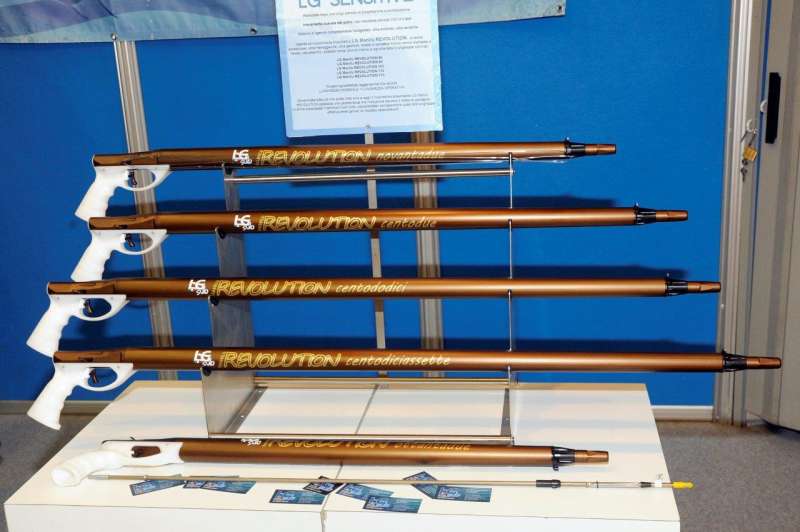
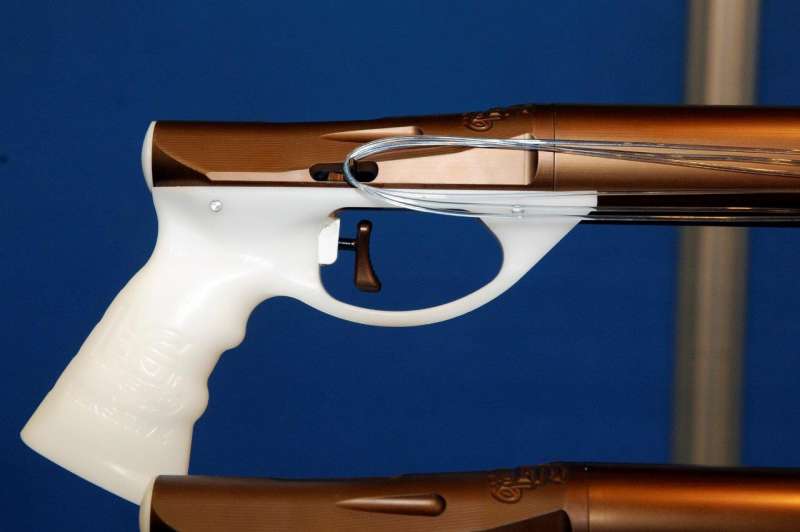
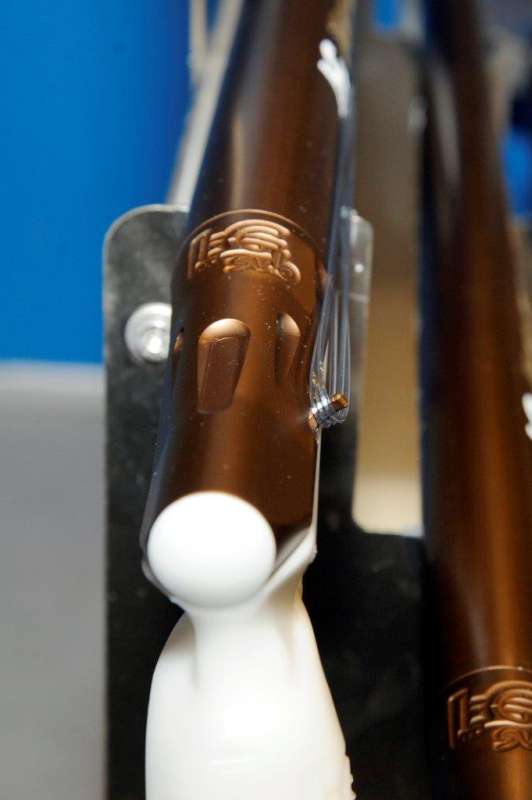
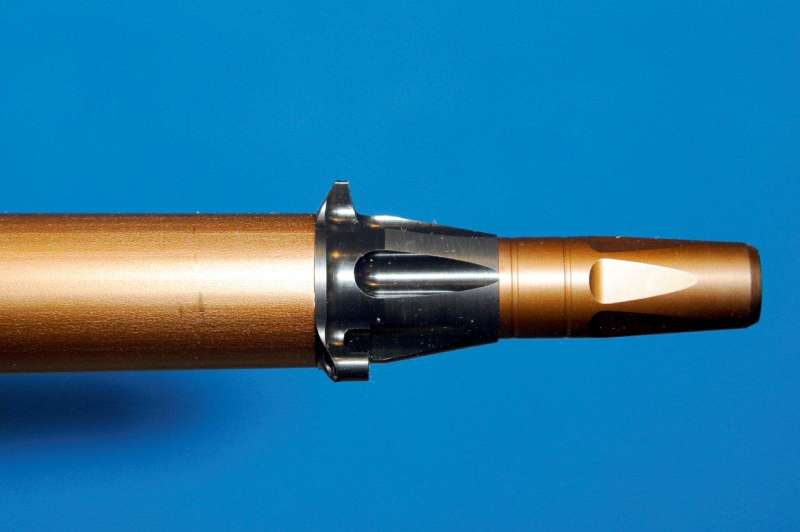
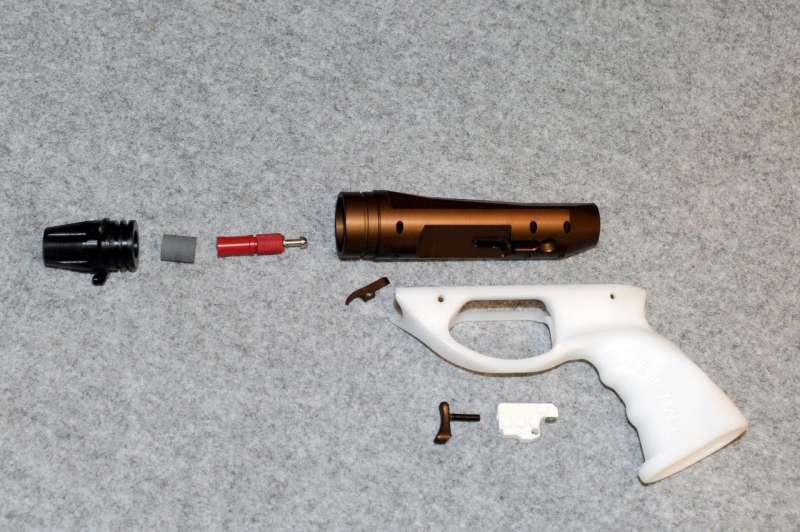
We have now the exclusive for Denmark of LG Sub and we will start with their “Ferrari of the airguns”… the Manilu Revolution!
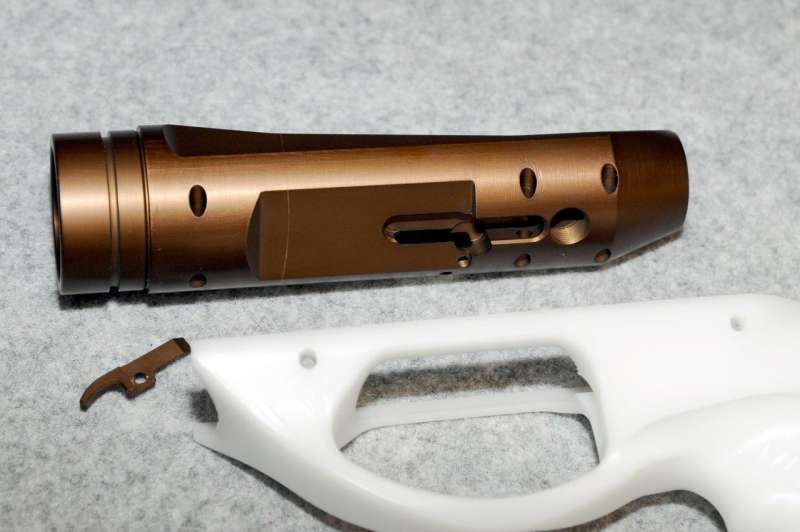
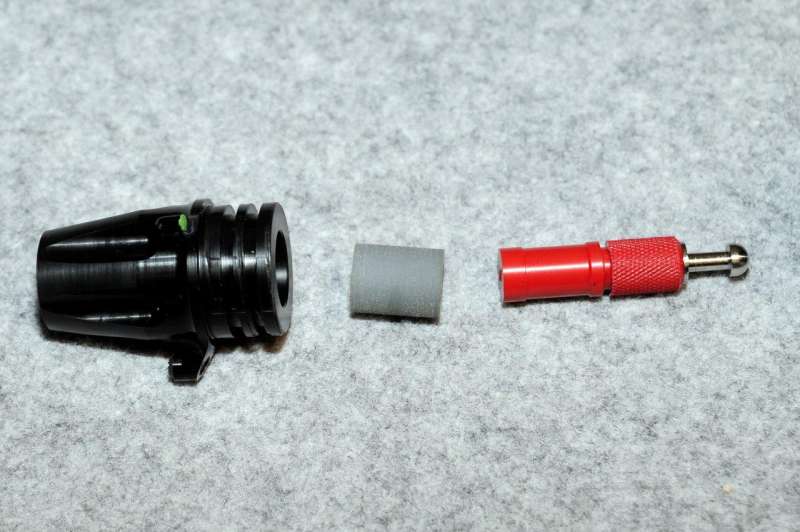
100% machined components: handle in Delrin and butt in aluminium, trigger mechanism fully adjustable back/forth, vacuum head LG that fit all spears without need to replace the seal (slider seal system), reel LG mounted as standard, barrel 12mm with high speed piston and 7cm longer than another gun of same size (the 82 has the barrel of a 90), mechanism in demultiplication not direct… and tube full conical to improve maneuverability but not nose heavy thanks to the light materials of the head, valve extra short…
And, of course, Divecenter.dk will be responsible for the service in DK, spare parts and all the rest… 😉
-
marts 4, 2016 kl. 1:42 am #27876
-
marts 3, 2016 kl. 8:57 pm #27872
Lamberto AzziDeltagerI’ve tried to contact the Pathos guy but they are off-grid: tomorrow starts the Eudi 2016 in Bologna and all spearfishing people are there… we need to wait until Tuesday 😉
I am planning to order some Sigalsub instead… they already produce spears for airguns in the same steel as Pathos but with a higher attention to hydrodynamic (in Italy we have free-swimming fish mostly) instead of pure strength. Both with threaded end or naked spear from 6,5mm to 8mm.
The slider from Sigal is hydrodynamic type and i’ll take a few next time i order (soon).
Anyway… brace yourself because we are working hard to get into DK some REALLY exciting news for the “Dark Side” :woohoo:
Can you guess what is this?? 😛
Attachments: -
marts 3, 2016 kl. 2:59 am #27867
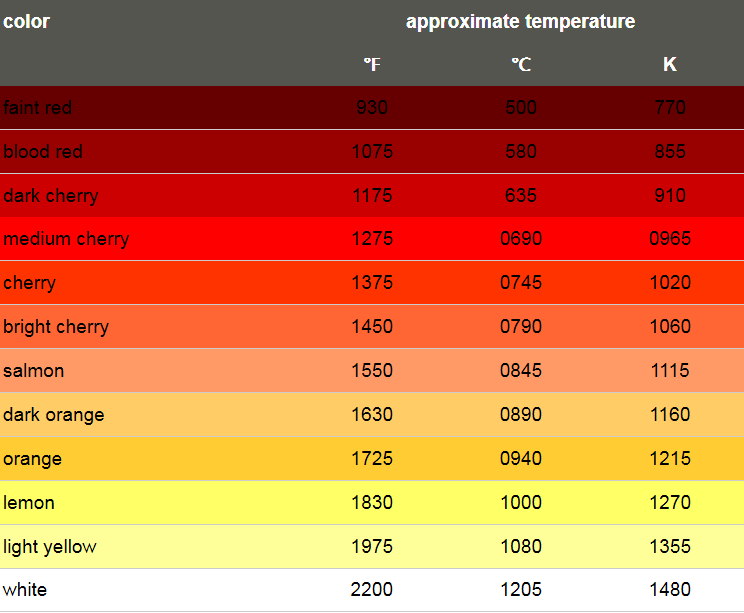
Lamberto AzziDeltagerI’ve spoken with a blacksmith/spearo today in the shop: he suggested to place the spear into a tube full of water to limit the area that will be warmed up by the flame and when it reach the yellow lemon colour just let it drop down to quench it… he also said that oil can be dangerous because it can burn. After that temper at low temperature.
He told me that it will never be the same but will be usable… good enough for me.
Anyway I’ll ask Pathos if they can make some spear with the tread on the back… maybe they’ll do it if i can order 10-15 pieces: they already make spears with the tread in the front…
-
marts 3, 2016 kl. 1:43 am #27865
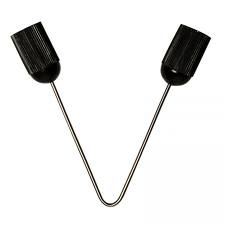
Lamberto AzziDeltagerOkay tak, men hvad er problemet med det wishbone, du viser, Lamberto?
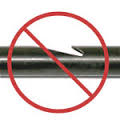
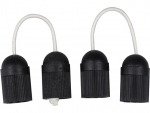
This kind of wishbone tend to break easily if it get dented or by metal fatigue.. if that happens while you load then you’ll have a sharp hook in your hand pulled by a 40-50 kg force… not the healthiest thing for your fingers…
-
marts 2, 2016 kl. 12:04 pm #27862
Lamberto AzziDeltagerTo build a spear from scratch it is certainly challenging (especially to make it straight) but to rescue or modify an old spear i don’t think so.
I have been refreshing my metallurgy memories now and the transaction between molecular structure martensite and austenite of a steel is caracterized by the loss of magnetic properties: after transaction temperature the steel become amagnetic… that is easy to see with a magnet fixed to the “forge” or to the bricks you use as forge.
To go above the required temperature has the only downside that if you heat it too much you’ll melt it and the rod can start bending under it’s own weight: luckily the “grandpa knowhow” don’t rely much on instruments but colours so it is enough not to pass the lemon-yellow colour to be safe.
My doubts are related to the transaction between treated part and rest of the shaft… if quenced completely it will retain it’s martensite structure but lose big part of it’s hardness becoming more tough instead… but that is something I could live with if it is a broken spear that I’m saving from death 😉
Here is a colour chart used by blacksmiths and there are many online… mild steel or stainless steel don’t have a big difference in colour chart and anyway less than it is appreciable by naked eye.
An IR termometre like those sold in hobby shops may do the job also… i have one somewhere and I’ll try next time it pass under my eyes 😉
Attachments: -
marts 2, 2016 kl. 9:57 am #27859
-
marts 2, 2016 kl. 9:54 am #27857
-
marts 2, 2016 kl. 9:47 am #27855
Lamberto AzziDeltagerI don’t know for sure as my memories about metal technology are 30 years old but I’m quite sure that with a butane gas torch should be quite easy to reach 1000 C… the butane torches used for tagpap have a flame temperature of almost 2000 C and a spear rod is very thin… I’ll ask to my neighbour that is a mechanical engineer working with special components in the weirdest metals… we even tried to make a spear with wolfram tip once….
-
marts 1, 2016 kl. 7:50 pm #27851
Lamberto AzziDeltagerActually it is a lower temperature: Lower temperature mean higher hardness but less toughness… it will be harder but it can shatter easier… you need to find the right combination.
I don’t know how they do but Giacomo (De Mola… sales manager) told me that the process take almost 72 hours and that this is the reason why we should book spears in advance… they are extremely popular in Italy now and the production can’t cope with demand.
You want to see how tough they are?… this is with a Demultiplied speargun 😉
-
marts 1, 2016 kl. 6:46 pm #27849
Lamberto AzziDeltagerThe “Geek” reason is that the overall mass of the Dyneema is negligible compared to the metal wishbone…
A spear of a 75 is approximately 300g and a standard wishbone is around 20-30g… so basically 6-10% of your rubbers energy is used to put in motion and accelerate your wishbone only…
Whatever wishbone you chose stay FAR AWAY from this model…
Attachments: -
oktober 3, 2019 kl. 8:04 am #62474
Lamberto AzziDeltagerThat is the Diablo gun?
Yes… 90 cm.
The first shot seems lame… but was a 3-4m shot and has put the fish on the line 😉And by the way… there was a discussion about reel: that fish has taken out 15+m of line in 2-3 seconds… it was a low shot (I couldn’t see it clearly… only the shadow) and it was on the belly.
Without a reel it would have been either a rip-off or, using a buoy on the gun, a lost speargun: as soon the fish enter the current stream a few meters ahead, there is no way to stop it… and the current at Kronborg is a serious matter.I also use now a double barb spear: I have not for a long time because of night hunting is point-blank shots, but in daytime it secure the fish soooo much better!
Downside of the double barb is that, as you can see on the video, you cannot shoot fish from the front with a gun like that but you should wait for a side-shot: shooting from the front it would be “kebabed” head to tail, and after that, good luck for taking out the spear without pulling it through out the full 3 passes of line! lol -
september 30, 2019 kl. 12:02 pm #62396
Lamberto AzziDeltager@David
With BO you mean barotrauma?
Mobile ballast can be made with a heavy pendulum, used especially for deep dives and that require some know-how and cannot be improvised… but can also be a simple 2-belts setup with one attached to a solid line for recovery: this last system can be used for every kind of dive, and I’m planning to start using it for fishing in wrecks where the current makes it too hard for me.
I can obviously dive and fish on a 15-20m wreck even if I’m way out of shape (round is a “shape” but not really the best 😉 ), but especially with a 7mm I must use way too much energy at the bottom and on the way up/down in current, so it will be much safer to leave one belt at the bottom as soon as I am close and fish in total comfort with the perfect ballast for that depth.I have seen Giacomo De Mola using this system and looks great: he and Valerio Losito used it at the last pillar on the Euroafrican 2nd day because of the depth and current, and I have been thinking about it since then.
With a 7mm I dive in shallow waters (0-5) with 14 kg, and 15-20m with 8 Kg of lead but for the first 7-8m i need to push down energetically and at the bottom I would be fine with 4 Kg instead because I like soft wetsuits.
Using this system I can simply drop my 10 kg belt as soon as I reach the bottom or earlier (I can then start gliding much earlier and save a lot of oxygen) and then fish in total comfort without being too heavy… the way back will be also MUCH easier and safe.I’ll try it as soon as I get the occasion of decent weather and high WAF points… and I’ll try to get a video.
Ciao!
-
september 26, 2019 kl. 9:55 pm #62312
Lamberto AzziDeltager@morten
Reels… definitely the LG Sub reels… in my opinion the best on the market (by far) and also fairly priced… they are made in Delrin milled from solid rods…
I use the model LG Twist Light 80mm that is, in my opinion, the right one for Denmark… but if you are want a smaller one then the 60mm is also fine.
Line: braided nylon 1,5mm with monoline terminal before the spear (or dyneema terminal if you like)https://www.lgsub.it/categoria-prodotto/mulinelli-e-accessori/mulinelli/ use Google Translate
Also available on Scubastore and others.2 guys sharing the same speargun can be an idea in deep dives… and the 2 guys should be really good friends!
Security?? Knowing one’s limits and the basics techniques of apnea is the 99% of what one need… the rest 1% is not to push that limit: a course of freediving made specifically for spearfishing (so in real conditions) is the biggest precaution one can take. All other precautions are actually redundant if one is technically prepared and reliable as a diver.
-
september 23, 2019 kl. 10:56 am #62193
Lamberto AzziDeltager@David
Here you go:
– standard version https://youtu.be/VIhURuQ_eHA
– floating version (if you dive from a boat) https://youtu.be/ej-RKXrqVTQ -
september 22, 2019 kl. 9:31 pm #62186
Lamberto AzziDeltager@David. Hi! how are you? Still in Asia?
For the connection belt-buoy line I use a dropweight: is a 500g cigar-shaped lead that can be quickly released to mark a hole or a reef and, also, to park the buoy when you want to explore an area without beying annoyed by the line… especially useful in wrecks or in some harbour piers or other man-made structures.There are dozens of shapes and systems for the so called “pedagno” in Italian… you can find also very nice DIY ideas on Google Pictures.
There are two “schools”: one is just a lead ment to be used on the buoy line, the other is for when you go with the boat, so it looks like a small floating sprocket with line rolled on and a lead at the end… you just release it from the belt and the sprocket will unroll to the surface marking the spot (very useful in caves). The second version is obviously more complicate to make because you want something extremely easy to use and that can hang on your belt to be released in a second if needed…
-
-
ForfatterIndlæg


Forum er sponseret af